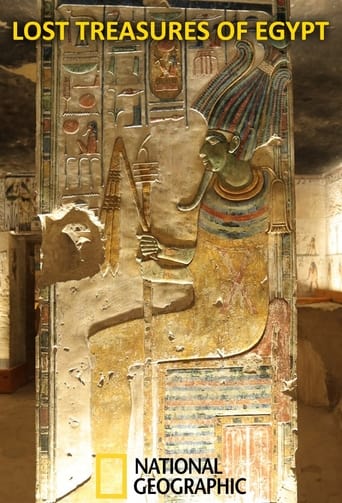
With over 60 tombs, the Valley of the Kings is the most-famous burial ground on Earth. In the biggest Egyptian excavation ever, a team of archaeologists led by Zahi Hawass heads into the Western Valley to hunt for evidence of an undiscovered tomb.
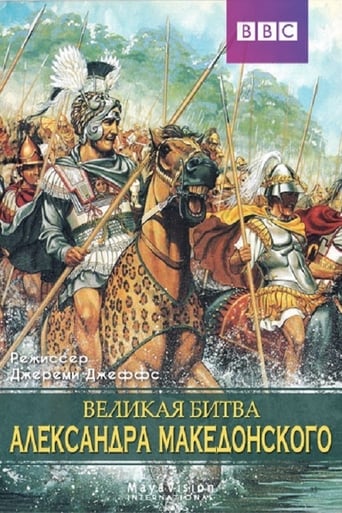
Michael Wood travels through Syria and Iraq to uncover the story of Alexander the Great's decisive battle against the might of the Persian Empire in 331 BCE. Ancient writers agreed that it was fought somewhere near the city of Irbil in northern Iraq, but the exact location has never been discovered. Using dramatic new finds in the UK - a cuneiform clay tablet in the British Museum and a papyrus dug up in Egypt - Michael sheds new light on the course of events. Then to reconstruct the campaign, he follows Alexander's route through Damascus and Aleppo to the river Euphrates in Syria and travels into Northern Iraq with the British and US military.
2009
2008
Tutankhamun: Secrets of the Tomb (2022) In 1922, the tomb of Egyptian boy king Tutankhamun was unearthed. Now the extraordinary scientific truth of the 'Pharaoh's Curse' is revealed.
2022
2004
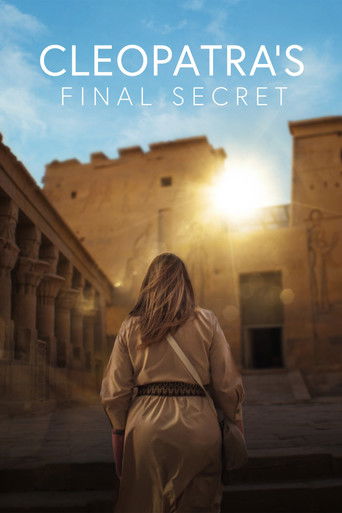
After 20 years seeking Cleopatra's tomb, archaeologist K. Martinez's search shifts to an underwater Mediterranean site. She's joined by Titanic finder Bob Ballard, Egyptian Navy and dive teams to explore the location.
2025
Archeologists discover a pit filled with terracotta warriors buried to protect the grave of the First Emperor of China.
2016
2019
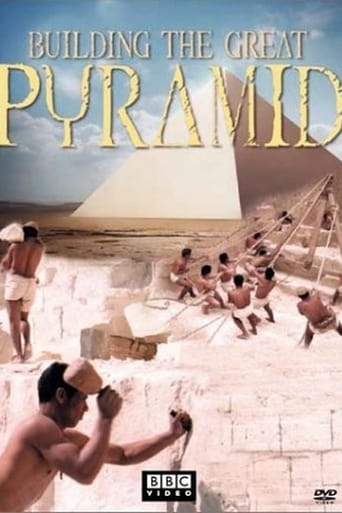
Of the Seven Wonders of the Ancient World, the Pyramid is the only one to survive. Many believe that even with our 21st-century technology, we could not build anything like it today. Based on the most up-to-date research and the latest archaeological discoveries, here is how the Pyramid came to be.
2002
2024
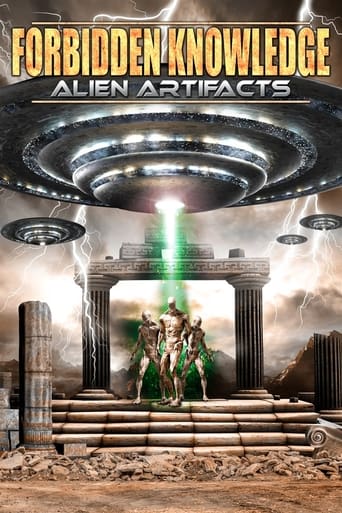
Shocking new evidence of highly advanced civilizations mounts as previously unexplored regions of the earth reveal mind boggling artifacts that defy all convention and utterly mystify today's academic and scientific factions. It's clear there are massive gaps between our current understanding of the cosmos and the origins of humanity and that of ancient civilizations that existed before "recorded history". Experience unprecedented relics and artifacts that force us to re-evaluate the mainstream dogma of who we are and where we came from.
Starting from the colonial city of Trujillo, this documentary reveals natural and archeological features along the north coast of Peru, where the Moche culture thrived from the 1st Century BC to the 6th Century AD.
2014
In the Formative Period 4,000 years before the Incas and the arrival of the Conquistadors, Peru’s earliest civilizations - the Chavín, Caral, Ventarrón, Sechin, Cupisnique, and Cajamarca cultures - built centers of learning and technological achievements, including the largest work of hydrological engineering in the ancient Americas: the Cumbemayo canals.
2018
A new exploration of familiar places located in the region of Rhône and Isère throught an reinvention of digital nuances, a study of perceptions and fluidity around the nature of motion in landscapes and human interactions.
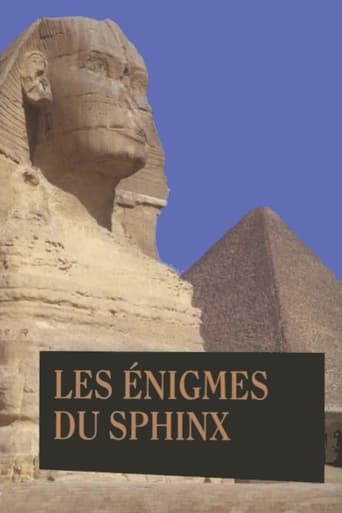
For over 4000 years, the Sphinx has puzzled all who have laid eyes on it. What is this crouching lion, human-headed creature? Who built it and why? To unlock its secrets, two teams of scientists and sculptors immerse themselves in the world of ancient Egypt — a land of pharaohs and pyramids, animal gods and mummies, sun worship and human sacrifice.
2010
The adventurous life of Natacha Rambova (1897-1966), an American artist, born Winifred Kimball Shaughnessy, who reincarnated herself countless times: false Russian dancer, silent film actress, scenographer and costume designer, writer, spiritist, Egyptologist, indefatigable traveler, mysterious and curious; an amazing 20th century woman who created the myth of Rudolph Valentino.
In this gripping investigation, archaeologist Pepi Papakosta is on a hunt for Alexander the Great's lost tomb, and she makes an extraordinary discovery.
Around 800 BC, Kush, a little-known subject state of Egypt, rose up and conquered the Egyptians, enthroned its own Pharaohs, and ruled over the empire of King Tut for nearly 100 years. This unlikely chapter of history has been buried by the Egyptians and belittled by early archaeologists, who refused to believe that dark skinned Africans could have risen so high. But now, in the heart of Sudan, archeologists Geoff Emberling and Tim Kendall are bringing the truth about the Black Pharaohs to life.
3,200 years ago, Egypt is living the final hours of its golden age under the reign of Ramesses II. After ruling the country for 67 years, the great pharaoh dies at the old age of 92. His mummy is burried in the heart of the Valley of the Kings. This is the beginning of his great journey towards the afterlife but only under one condition: that his tomb remains off limits forever. However, in the 19th century, many European adventurers explore the tomb of the king searching for the burial chamber. Then begins an archeological investigation, which reveals the story of Ramesses II after-life.
2011
Forensic experts scan Pompeii’s victims to investigate why they didn’t escape the eruption.