Director: Mario Cinus
Keywords
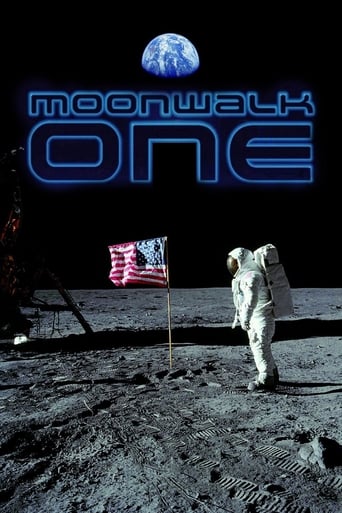
Top Gear presenter James May presents this informative program that examines the historic moon missions. Traveling to America, May meets three of the men who walked on the surface of the moon, learning how it felt and how the now antiquated technology was used to achieve such an historic feat.
2009
A team of international scientists attempt to document the first-ever image of a black hole.
2019
NASA launches its most ambitious hunt for traces of life on Mars, landing a car-sized rover in a rocky, ancient river delta. The rover will stow samples for possible return to Earth and test technology that may pave the way for human travel to Mars.
2021
The Hubble Space Telescope has spent more than 30 years scrutinizing the cosmos in an attempt to unravel the secrets of the Universe and go as close as possible to its origin. But Hubble has also become the superstar of space, offering us magnificent paintings of the Universe.
2022
For two and a half years we followed the scientific team of the NASA Lucy Mission a mission that will unveil the origins of the Solar System and shared with them the many challenges they had to overcome such as a countdown to launch on time the building of the huge solar arrays or a pandemic.
An inside look at NASA’s new Artemis program and its mission to return astronauts to the moon for the first time in 50 years.
Commemorating the space agency's 50th anniversary, follow John Glenn's Mercury mission to orbit the earth, Neil Armstrong's first historic steps on the moon, unprecedented spacewalks to repair the Hubble stories, and more!
2008
The remarkable story of the determination and courage of a generation. A tribute to three brave astronauts and the thousands of men and women behind them during the final days of NASA's Apollo program.
2011
A mind-bending, thrilling journey exploring the fragility and wonder of planet Earth, one of the most peculiar, unique places in the entire universe, brought to life by the only people to have left it behind – the world’s most well known and leading astronauts. This edit combined episodes one and ten to create a new movie.
2018
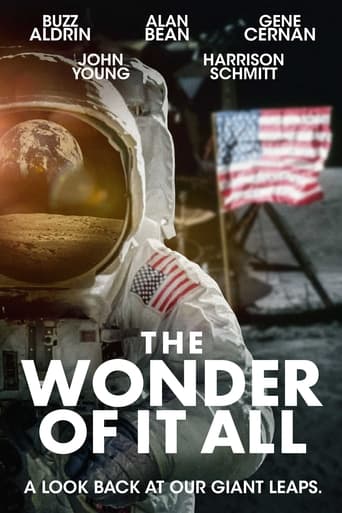
The Wonder of it All focuses on the human side of the men behind the Apollo missions through candid interviews with seven of the Apollo astronauts: Buzz Aldrin, Alan Bean, Edgar Mitchell, John Young, Charles Duke, Eugene Cernan and Harrison Schmitt. They all reflect on the training, the tragedies, the camaraderie, and the effect that their space travel has had on their families.
2007
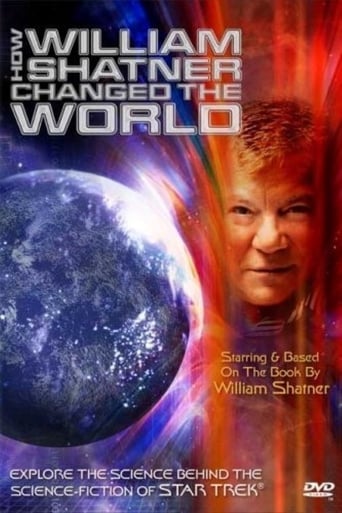
William Shatner presents a light-hearted look at how the "Star Trek" TV series have influenced and inspired today's technologies, including: cell phones, medical imaging, computers and software, SETI, MP3 players and iPods, virtual reality, and spaceship propulsion.
2005
Comets pose one of the greatest threats to life on Earth - a threat that can only be countered if we find out more about them. In 2005, in an audacious bid to do just that, NASA scientists launched a space probe to collide with a comet in the emptiness of deep space. This film follows the amazing story of mission Deep Impact, from its inception through to the final nail-biting moments when the probe and comet Tempel 1 met head-on.
2006
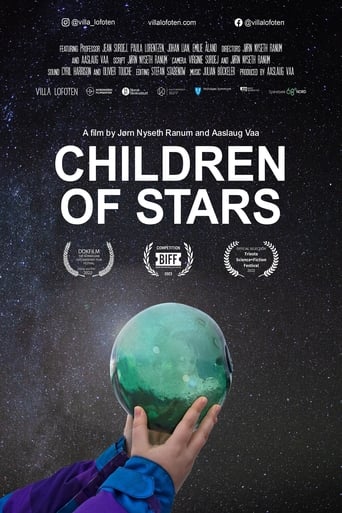
Astrophysicist Jean Surdej brings a small group of teenage pupils on a trip to the Lofoten islands in northern Norway, for a very special class on the solar system. Using the geography of the archipelago to illustrate the distances between the planets, they journey through space by car and ferry, with the picturesque landscapes standing in for the black emptiness that surround the heavenly bodies. A masterstroke of both pedagogy and filmmaking, Children of Stars is a captivating documentary about humanity's place in the grand scheme of things.
2023
The International Space Station is the most ambitious orbital project ever built. This film explores elements of life inside it.
Moonscape is a free and freely downloadable high-definition documentary about the first manned Moon landing. Funded and produced by space enthusiasts from all over the world, it shows the full, unedited Apollo 11 landing and moonwalk, using only the original TV and film footage and the original audio and photographs. All this material has been scanned, digitized and restored from the best available sources. The live TV broadcast, the 16mm color film footage shot on the Moon and in Mission Control, and the Hasselblad 70mm color photographs taken by astronauts Buzz Aldrin and Neil Armstrong, have been fully synchronized with the audio recordings (including the onboard and Mission Control recordings) and are presented in real time, as they happened, with full subtitles in English or Italian.
2013
This documentary by Theo Kamecke from 1970 gives an in-depth and profound look at the Apollo 11 mission to the moon. NASA footage is interspersed with reactions to the mission around the world as the film captures the intensity as well of the philosophical significance of the event. Won special award at Cannes.
1972
From the unique vantage point of 200 miles above Earth's surface, we see how natural forces - volcanoes, earthquakes and hurricanes - affect our world, and how a powerful new force - humankind - has begun to alter the face of the planet. From Amazon rain forests to Serengeti grasslands, Blue Planet inspires a new appreciation of life on Earth, our only home.
1990
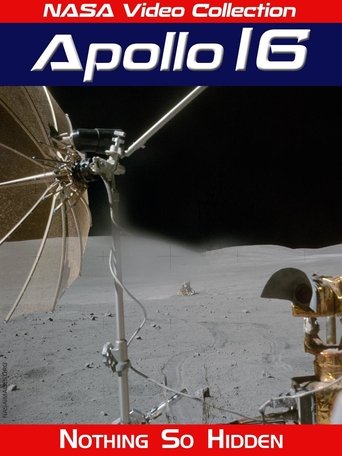
Apollo 16 mission from NASA footage.
A documentary about the Apollo 17 mission to the Taurus-Littrow on the moon, the final lunar landing mission in the Apollo program, December 1972. Produced by A-V Corporation for NASA. The film was distributed both as an ephemeral film (shown to an audience via a 16mm film projector), and was also shown on TV (and was shown on both public and commercial stations per a search of vintage newspapers).
1973
Join the Mars rovers Spirit and Opportunity for an awe-inspiring journey to the surface of the mysterious red planet.