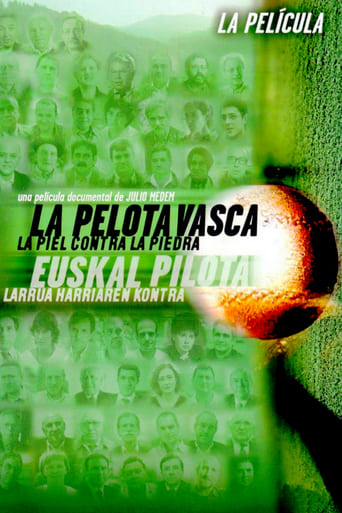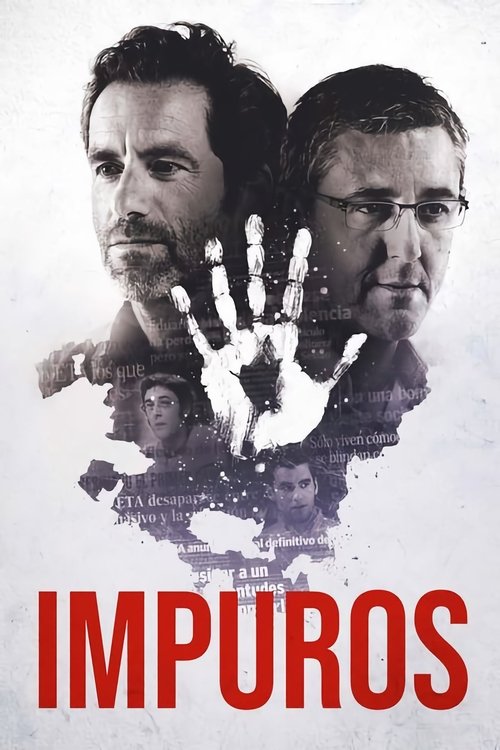
At just 17 years old, Eduardo Madina and Borja Semper decided to enter politics to defend freedom of thought in the Basque Country. This made them a target of the ETA terrorist group for almost two decades.
An attempt to create a bridge between the different political positions that coexist, sometimes violently, in the Basque Country, in northern Spain.
2003
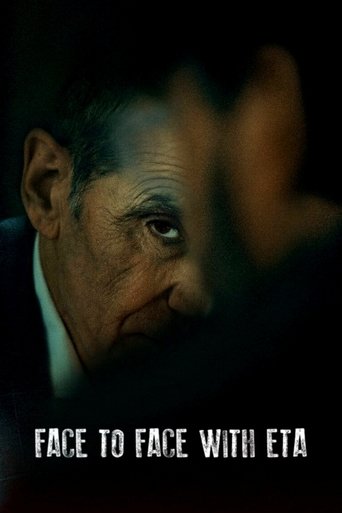
An in-depth interview with José Antonio Urrutikoetxea, known as Josu Ternera, one of the most relevant leaders of the terrorist gang ETA.
2023
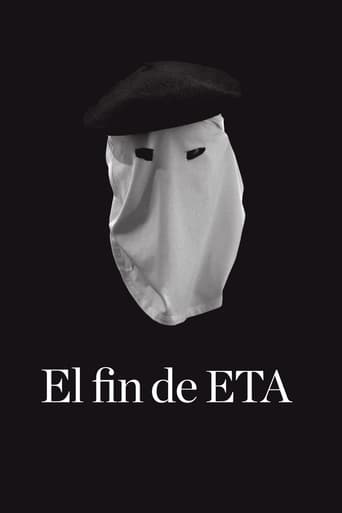
The chronicle of the process, ten long years, that led to the end of ETA (Euskadi Ta Askatasuna), a Basque terrorist gang that perpetrated robberies, kidnappings and murders in Spain and the French Basque Country for more than fifty years. Almost 1,000 people died, but others are still alive to tell the story of how the nightmare finally ended.
2017
Kukutza III was a gaztetxe (self-managed social centre) in the neighbourhood of Rekalde, Bilbao. It was occupied in 1998, and it was evicted by the police in 2011. The documentary shows some activities that were hosted by the gaztetxe.
2009
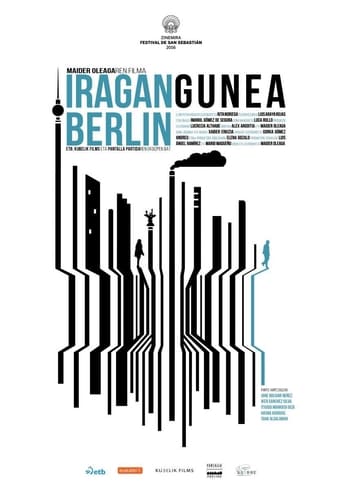
The film follows five people from different origins as they move anonymously around the streets of Berlin. Each of them with another life somewhere else, trying to ascertain where to go.
2016
Documentary about anchovy fishermen in San Sebastian
1957
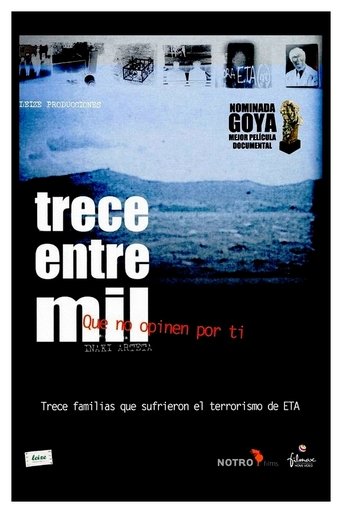
The abject crimes of the terrorist gang ETA have marked the lives of many Spaniards; men, women and children who were silenced, harassed, persecuted, finally murdered. Thirteen stories, thirteen tragedies, just thirteen among thousands.
2005
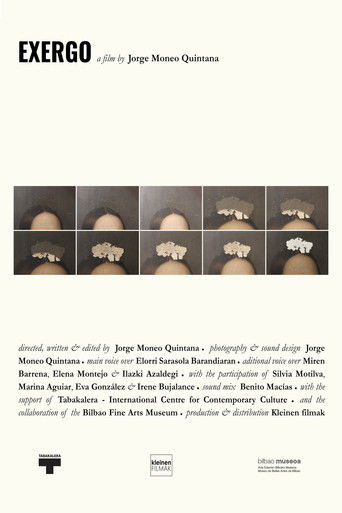
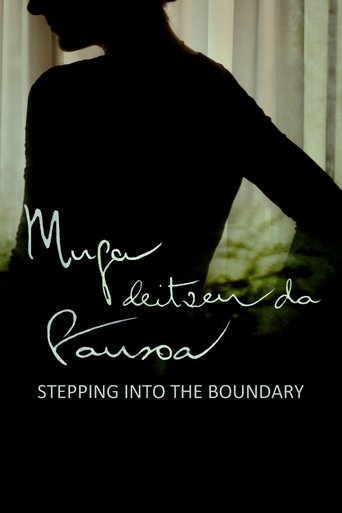
Departing from peripheral details of some paintings of the Bilbao Fine Arts Museum, a female narrator unravels several stories related to the economic, social and psychological conditions of past and current artists.
2024
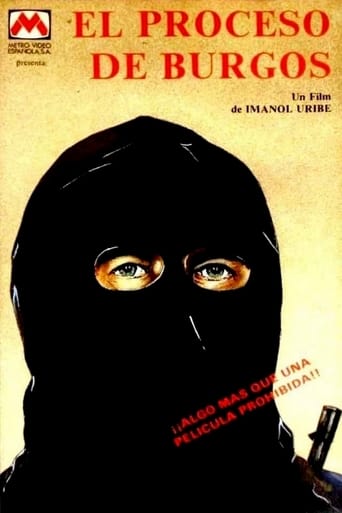
Documentary about the court martial held following the assassination of Melitón Manzanas, commissioner of the Political-Social Brigade of Guipúzcoa, in an attack carried out by ETA on August 2, 1968. The film includes a series of interviews and testimonies from those imprisoned and prosecuted in that court martial. Following the attack, a state of emergency was declared in Guipúzcoa and hundreds of people were arrested.
1979
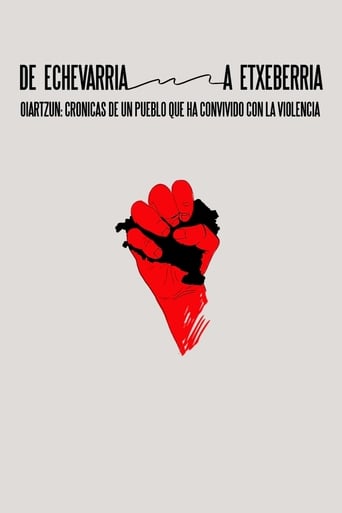
An in-depth investigation into how violence, any kind of violence, has affected and is affecting the inhabitants of Oiartzun, in Guipúzcoa, Basque Country, Spain, where Basque nationalism, the abertzale left and the atrocious terrorism of the criminal gang ETA have cursed and destroyed lives for decades…
2015
In a temple in Thailand, an order of Buddhist monks are performing a ceremony for people who headed there to get re-incarnated. There, we meet Tarn, a young Thai woman who lived in the Basque Country some years ago and who is still fascinated with that region, food and culture.
2010
San Sebastian, Basque Country, Spain, June 27, 1960. A bomb explodes at the Amara train station. Begoña, a child of only twenty months, dies a few hours later as a result of the injuries sustained in the attack.
A reflection on the assassinations of social democrat politician Fernando Buesa Blanco and his bodyguard Jorge Díez Elorza, perpetrated by the terrorist gang ETA in Vitoria-Gasteiz, Basque Country, Spain, on February 22, 2000.
2001
Basque Country, Spain. No one seems to know them. Some glances avoid theirs. Their social circle becomes smaller and smaller. They live under escort, watched by those who protect them and by those who threaten them: it is the experience of living in the shadow of ETA, a savage terrorist gang of unscrupulous criminals… of merely existing under the yoke of those who tomorrow could be their executioners.
2004
Through interviews with different people linked to the work and life of the Basque sculptor Jorge Oteiza (1908-2003), this documentary aims to unravel fundamental aspects of his work.
2011
The relatives of the victims of the terrorist gang ETA speak of their suffering, their fear, their loneliness; of the systematic oblivion to which they are subjected by Basque society, both by those who remain silent and look the other way and by those who, accomplices of the criminals, share their repugnant ideology and celebrate extortion, kidnapping and murder, thus contributing to perpetuating a bloody reign of terror.
The personal stories lived by the Uncle, the Father and the Son, respectively, form a tragic experience that is drawn along a line in time. This line is comparable to a crease in the pages of the family album, but also to a crack in the walls of the paternal house. It resembles the open wound created when drilling into a mountain, but also a scar in the collective imaginary of a society, where the idea of salvation finds its tragic destiny in the political struggle. What is at the end of that line? Will old war songs be enough to circumvent that destiny?
2019
Donostia-San Sebastián, Basque Country, Spain, 2011. Maider, a filmmaker, moves to the very same flat where pedadogist Elbira Zipitria Irastorza (1906-1982) clandestinely established the first ikastola, a Basque school, under the harsh regime of dictator Francisco Franco. Despite of her pioneering work, developed throughout thirty years, her story is not well known, so Maider, intrigued, begins to research…
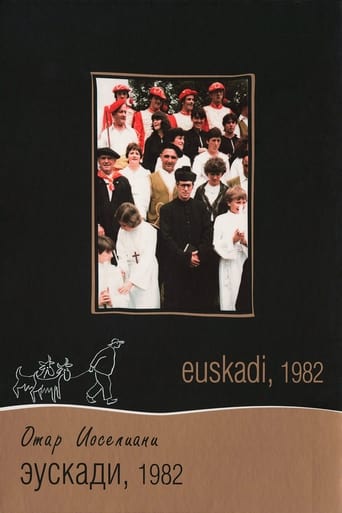
Part of a series in which foreign filmmakers portray a region or town in France. Otar Iosselani looks at the Basque region and its inhabitants.
1983
A young journalist travels to the Basque Country to meet with those responsible for the murders committed by the terrorist group ETA and their ideological accomplices. On his journey, he interviews repentant terrorists, those responsible for crimes who are now integrated into their communities, and those convicted of terrorism who now hold positions as mayors, parliamentarians, or university professors, to hear their explanations about their past links to the ultra-nationalist network and to find out what mark terrorism has left on the Basque Country after its long and painful existence.
2020